
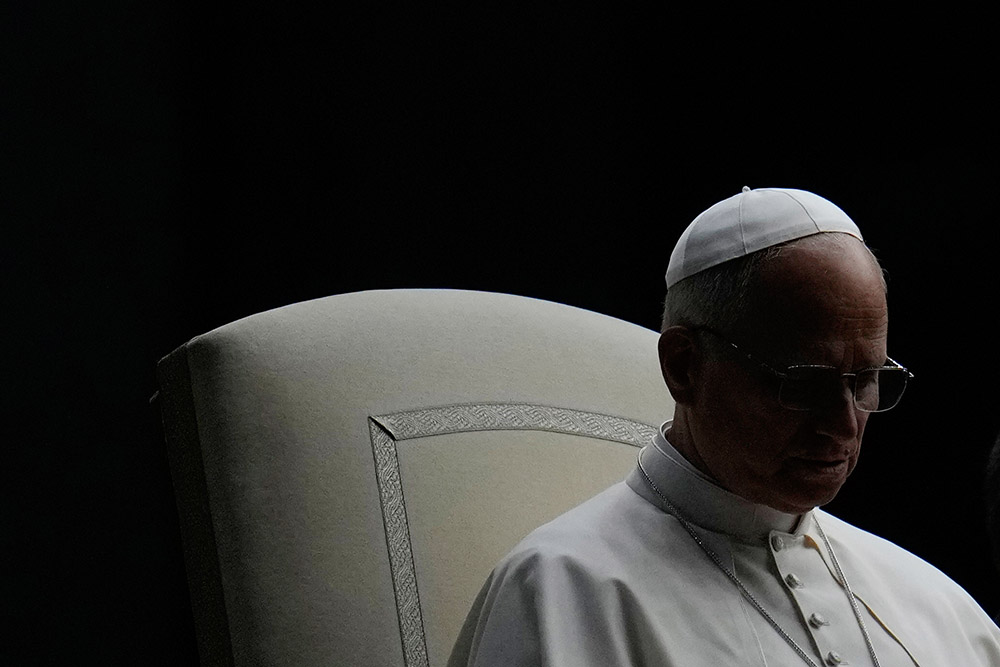
The Vatican’s child protection board said Thursday (Oct. 16) the Catholic Church has a moral obligation to help victims of clergy sexual abuse heal, and identified financial reparations and adequate sanctions for abusers and their enablers as essential remedies.
The Pontifical Commission for the Protection of Minors focused on the issue of reparations in its second annual report. It’s an often sensitive topic for the church, given the financial, reputational and legal implications it imposes on the hierarchy.
The report was significant — an official Vatican publication prepared with the input of 40 abuse survivors from around the world and giving voice to their complaints of how badly the church had handled their cases, and their demands of what they need to heal. It contained the shocking revelation that the Vatican office responsible for one-third of the world’s Catholic dioceses had received only a “small number of cases,” and only two reports of bishops who covered up child sex crimes
Pope Leo signals commitment to commission
The report covers 2024, a period before Pope Leo XIV was elected. . . . [click here to read more]

LLM-generated 4-paragraph summary:
Vatican Report Calls for Accountability and Healing in Clergy Abuse Cases
The Vatican’s child protection commission released its second annual report emphasizing that the Catholic Church has a moral duty to support survivors of clergy sexual abuse. The report, informed by input from roughly 40 abuse survivors worldwide, identified financial compensation and meaningful disciplinary action against perpetrators and those who shielded them as critical steps toward healing. Pope Leo XIV, the first American pope, has acknowledged that the abuse scandal remains a serious crisis and has expressed support for the commission, which was originally established by Pope Francis in 2014.
A central theme of the report is that the Church’s own internal handling of abuse cases has compounded the harm done to victims. Decades of dismissing, silencing, and blaming survivors — combined with a secretive and slow canonical process — have repeatedly retraumatized those seeking justice. The report argued that punishments must genuinely reflect the seriousness of the crimes committed, and that when church leaders are removed or disciplined, the public deserves a transparent explanation rather than vague announcements about retirements.
The commission also conducted a review of child protection practices across more than a dozen countries and several religious organizations. Results were uneven: some nations like Malta and South Korea showed strong engagement, while others, including Italy, had poor response rates from dioceses. Even more striking was the revelation that a Vatican office overseeing roughly one-third of the world’s Catholic dioceses — spanning Africa, Asia, Oceania, and parts of Latin America — had documented only a handful of abuse cases and just two instances of episcopal cover-ups.
Commission members acknowledged that these numbers almost certainly reflect severe underreporting rather than an absence of abuse. Cultural taboos, fear of retaliation, lack of resources, and inadequate reporting structures in poorer regions all contribute to cases going unaddressed. Officials stressed that empowering children and families with knowledge about protection and prevention, along with building trust in reporting systems, is essential to making meaningful progress in regions where abuse remains deeply hidden.

